
Airport Terminal & Aviation Facility Roofing in Greensboro, NC
Airport terminal and aviation facility roofing in Greensboro, NC — large low-slope decks, jet-blast and wind exposure, and 24/7 operations at PTI and area hangars.
Request A Roof Walk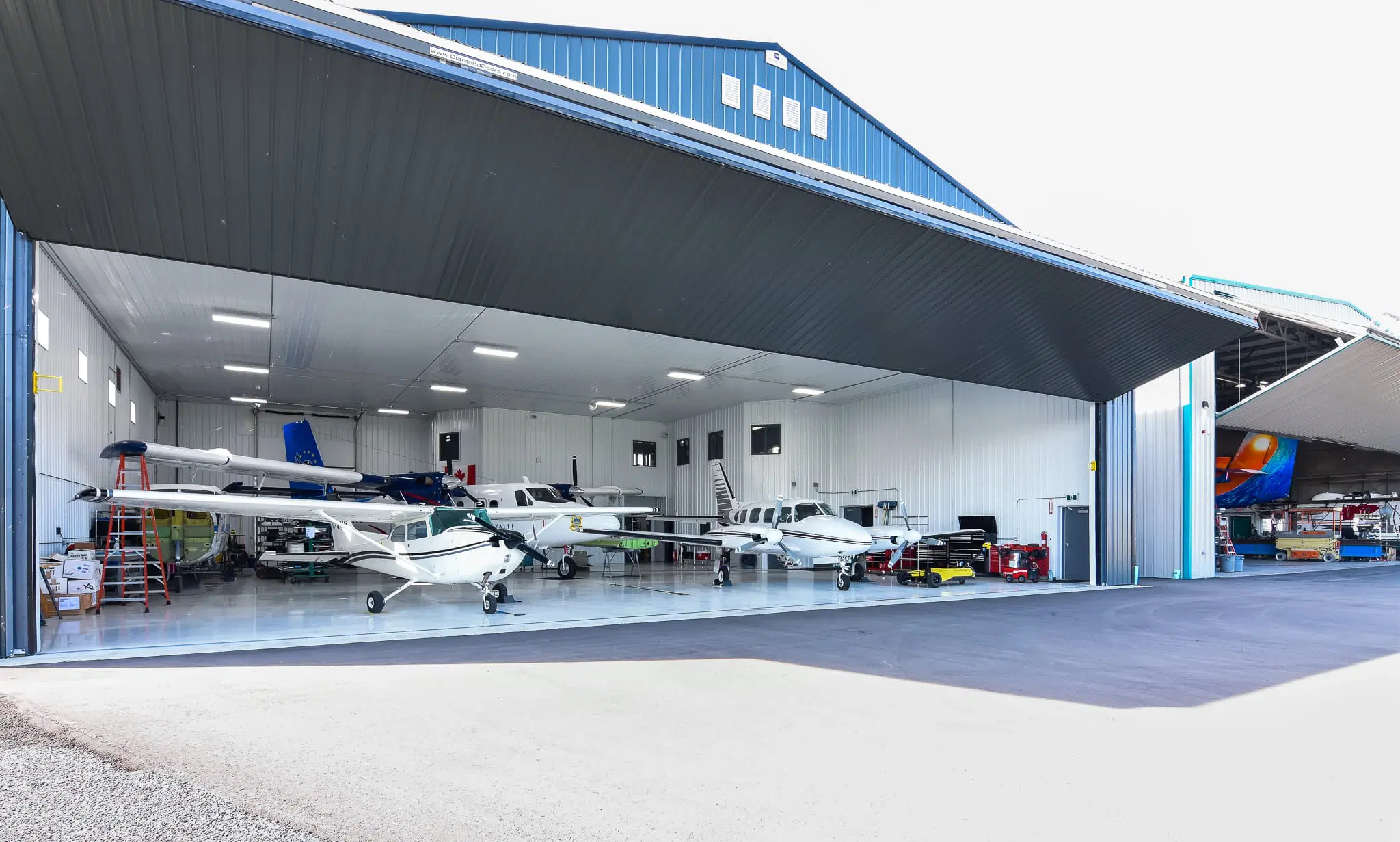
An airport roof cannot follow a normal commercial timeline, and pretending otherwise is how projects go sideways. Piedmont Triad International Airport sits between Greensboro, Winston-Salem, and High Point and runs around the clock, so before a single roll of membrane reaches the roof, every access point, material lift, and crew movement has to be coordinated with the airport's facilities department, the FAA's Part 139 safety program, and in some areas TSA security. We build that coordination into the scope before the contract is signed, not after the crew shows up.
What makes PTI different from most regional airports is the freight. The airport is powered by one of FedEx's major Southeastern hub operations, which runs hard overnight and pours additional large-format roof area into the surrounding aviation campus, cargo buildings, sort facilities, and the logistics parks that have grown up along the airport corridor between I-40 and I-73. That mix of passenger terminal, 24/7 cargo, and aviation-adjacent industrial gives the Triad a concentration of big low-slope roofs that all share the same airport access constraints. Smaller reliever fields in the area, including Smith Reynolds Airport over in Winston-Salem, round out the general-aviation side of the market.
These Roofs See Loads a Logistics Box Never Will
The roofing systems on terminals and aviation buildings carry requirements well beyond a standard commercial membrane. On airside roofs, jet blast and the constant high winds of an open airfield demand membrane adhesion and edge securement specified well above what you would use on a comparable warehouse, because wind that catches a loose edge at an airport does not stop at one seam. Terminal mechanical systems are denser and heavier than ordinary commercial, which means more curbed penetrations and more flashing to maintain. And terminal roofs tend to be enormous, nearly flat expanses where drainage design is everything and tolerance for ponding water is essentially zero.
Cargo, Rental Car, and the Rest of the Campus
The buildings around the terminal, cargo and sort facilities, rental car centers, fixed-base operator hangars, aircraft maintenance buildings, and airport-campus hotels, each bring their own roofing challenges, but the airport access requirement never goes away. Badging and security clearance apply to any part of an airport property, and our crews treat that as a baseline to plan for, not a hurdle to discover on the first morning. A cargo building near the FedEx ramp gets the same access discipline as the passenger terminal itself.
On the general-aviation side, the security protocols ease up but the buildings get more demanding structurally. High-bay hangars with wide clear-span roofs, whether a single private bay or a multi-unit FBO complex, generate serious wind-uplift loads, and the fastening pattern and seam geometry have to be specified for those structures specifically. Pre-engineered metal buildings and wide-flange steel hangars each move and load differently, and we spec and install for the building we are actually standing on.
An Aviation Manufacturing Corridor, Not Just an Airport
PTI has spent the last decade growing into an aerospace manufacturing hub, not only a passenger and freight airport. The aviation megasite on the airport's land has drawn major aircraft and engine work to the Triad, including the large assembly operations that put Greensboro on the map for building next-generation aircraft, and that has filled the corridor with enormous purpose-built production and assembly halls. Those buildings carry roofs measured in acres, with heavy process equipment, dense ventilation, and overhead crane structures penetrating the deck, and they sit on the same secured airport land as the terminal. Roofing them means combining the wind and access discipline of airport work with the large-format, heavy-penetration realities of industrial manufacturing, which is exactly the intersection this corridor lives at.
How We Run Work at a Live Airport
At an operational field like PTI we develop a phased work plan approved by airport operations and coordinated with the Part 139 staff. Material deliveries, crane lifts, and any work near airside areas happen only inside approved windows, with the FAA notice process used where it is required. For most terminal reroofing we specify a single-ply membrane over a tapered insulation system that builds in positive drainage and clears the ponding these flat decks are prone to. New high-bay hangars and aviation structures often call for standing-seam metal instead. We do not put a crew member airside without confirmed authorization, and we do not finalize a system until we have walked the roof with your facilities engineer and confirmed the deck, the load capacity, and the operational limits we have to work within.
Airport & Aviation Roofing Questions
How do you schedule work at an operational airport like PTI?
We build a phased plan approved by airport operations and coordinated with the FAA Part 139 staff. Deliveries, crane lifts, and any airside work happen only in approved windows, with the FAA notice process used where required. This is a standard part of how we set up an aviation project, not an exception.
What roof systems suit large-span terminal roofs?
Most terminal reroofing uses a single-ply membrane over a tapered insulation system that improves drainage and addresses ponding on these nearly flat decks. New high-bay aviation structures and hangars often call for standing-seam metal instead. The right choice depends on the existing deck, its load capacity, and operational limits, which we confirm by walking the roof with your facilities engineer.
How do you handle the density of HVAC and mechanical penetrations on terminals?
Terminal mechanical density runs well above standard commercial. Our pre-project survey documents every penetration, curb height, and clearance before we set the work plan, and flashing for oversized curbs and complex penetrations is detailed individually rather than from a generic pattern.
Can you work airside, near active aprons and runways?
Yes, with the proper badging and in full coordination with airfield operations. Airside work requires extra pre-planning and crew credentialing, which we build into the bid timeline. We do not mobilize anyone airside without confirmed authorization.
Do you handle hangar roofing for FBOs and general aviation?
Yes. Hangar roofing, from a single private bay to a multi-unit FBO complex, is a regular part of our work. High-bay hangars on pre-engineered or wide-flange steel framing have specific uplift and thermal-movement characteristics, and we spec and install for those structures specifically.