
Mixed-Use Development Roofing in Greensboro, NC
Mixed-use development roofing in Greensboro, NC — coordinated membrane, podium deck, and amenity-deck waterproofing for retail, residential, and office in one building.
Request A Roof Walk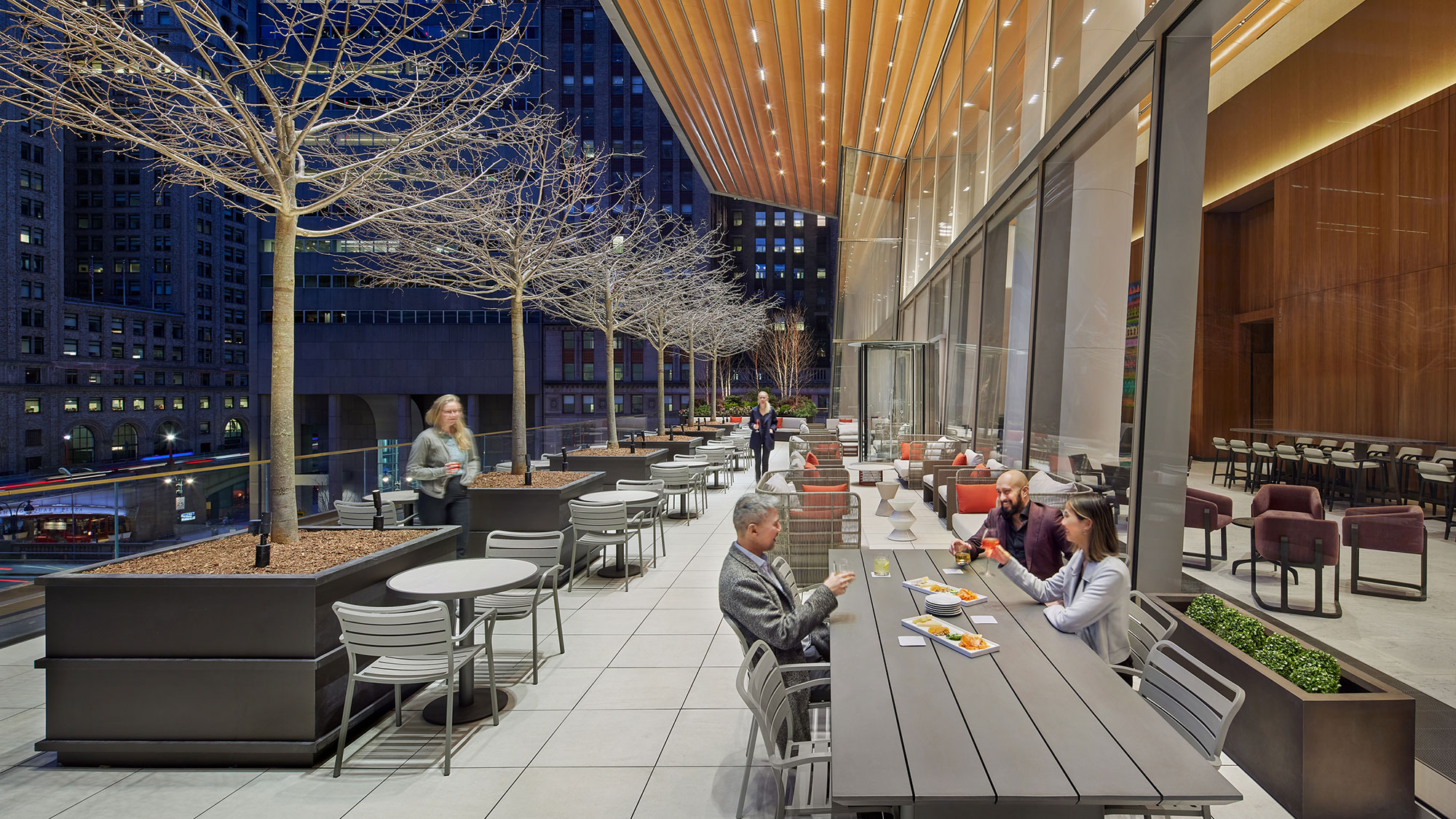
A mixed-use building is really several buildings stacked on one footprint, and the roofing has to respect that. We work on the kind of projects that have reshaped downtown Greensboro over the last decade, the South Elm Street redevelopment blocks, the residential-over-retail buildings filling in around LeBauer Park and the Tanger Center, and the suburban village-style centers out along Battleground Avenue and near Friendly Center where apartments sit atop shops. Each of these has more than one roof in play, and the failures happen at the seams between them.
Greensboro's downtown has leaned hard into this format, and the reasons are easy to see on the ground. The city center went from mostly empty after-hours storefronts to a neighborhood where people live above the restaurants on Elm Street, and that shift was driven by adaptive reuse of old textile and tobacco-era buildings plus new ground-up towers. A development like that puts a retailer, a property manager, a residential HOA, and a lender all under one roof assembly, and when water gets in, all four of them call at once. Our job is to make sure that call never has to happen.
The Podium Deck Is Not a Roof, and Treating It Like One Is the Classic Mistake
The single most expensive error we see on Greensboro mixed-use buildings is somebody specifying a standard roof membrane on a podium deck. The podium is the horizontal slab that separates parking or retail at grade from the apartments or offices above, and when that deck has a plaza, a courtyard, or planters on top, it needs a traffic-bearing waterproofing assembly, not a single-ply roof. That means a real membrane built for foot or vehicle loads, a drainage composite, root barriers anywhere there is landscaping, and protection board, all coordinated with the structural engineer on how the load stacks up. A roofing membrane laid on a plaza deck looks fine on day one and starts failing within a few years, and tearing it back out from under finished hardscape is brutally costly.
Upper Roofs, Penthouses, and the Amenity Deck
Above the residential floors there is usually a conventional low-slope roof, but it comes with its own complications: parapet drainage on a tall building, mechanical penthouse walls to flash through, elevator overrun enclosures, and increasingly a rooftop amenity deck where residents gather. That amenity deck is another traffic-bearing assembly hiding under the pavers and turf, and it gets coordinated with whoever sets the deck finish. Get the layering order wrong and the leak shows up two floors down in somebody's bedroom, which is a very different conversation than a stain on a warehouse floor.
Working Above People Who Live and Shop There
Downtown Greensboro has noise rules and tight sites, and a mixed-use building is occupied top to bottom while we work. The retail tenants need their entrances clear during business hours, the residents need their sleep and their parking, and the whole thing usually sits on a street with limited room to stage material. We build a phasing and access plan before we mobilize that spells out crane and hoist windows, dust and noise containment, and how we move material without choking off the shops below. And on every one of these jobs, we confirm the work area is watertight in writing before the crew leaves for the day, because a surprise overnight storm over occupied apartments is not a risk we take.
Infill Sites and Adaptive Reuse Add Their Own Wrinkles
A lot of Greensboro's mixed-use stock is not ground-up; it is old textile mills, warehouses, and tobacco-era buildings along the rail lines and around the South Elm corridor that have been converted to apartments over shops. Those conversions hand us roofs that were never designed for residential use overhead: original built-up roofing on timber or early concrete decks, drainage laid out for a single-story warehouse, and parapets that have shifted over a century of settlement. Before anyone commits to a recover or a new amenity deck on a converted building, we core-sample the existing assembly, check for trapped moisture, and confirm the deck can carry the new loads. Skipping that step on an old mill roof is how a beautiful adaptive-reuse project ends up with water in finished units a year after opening.
Coordinating the Warranty Across a Building With Many Roofs
A mixed-use project can have three or four distinct waterproofing systems from different product lines, each with its own warranty. We keep those straight from preconstruction through closeout, work inside the general contractor's submittal and mock-up process, bring the manufacturer's representative in for the inspections they require, and register every warranty so the coverage is intact when the building turns over. A developer, an asset manager, and an HOA board all end up holding pieces of that paperwork, and we make sure none of the pieces are missing.
Mixed-Use Development Roofing Questions
What is the difference between roofing and waterproofing on a podium deck?
A roof membrane is built to shed water and carry occasional maintenance foot traffic. A podium deck over occupied space carries structural deflection, planter soil, constant water in landscaped areas, and pedestrian or vehicle loads, so it needs a traffic-bearing waterproofing assembly with drainage and root protection. Putting a standard roof membrane on a plaza or courtyard deck is the wrong specification and it usually fails within a few years.
How do you coordinate work over occupied apartments and shops?
We build a phasing plan before mobilizing that sequences the work to protect residents and retail operations. Noise, vibration, and dust containment are planned up front, crane and hoist windows are scheduled around the building's use, and we confirm watertight dry-in in writing every day so an overnight storm is never a gamble.
Do you handle rooftop amenity decks?
Yes. The amenity decks common on Greensboro mid-rise and high-rise buildings need a traffic-bearing waterproofing assembly under the pavers or turf, not a standard membrane. We install and warranty those assemblies in coordination with the deck finish contractor and the structural engineer.
What documentation do developers and lenders expect?
Typically architect-reviewed submittals, manufacturer approval of each specified system, mock-up testing before full installation, quality-control inspection reports, manufacturer rep inspections at the key phases, and warranty registration at closeout. We work inside the project's submittal and QC framework from preconstruction through final inspection.
Can you reroof an occupied mixed-use building mid-renovation?
Yes, and it is a regular part of our downtown work. It takes disciplined daily dry-in, phased sequencing, and clear notice to building management and affected tenants. We do not leave a work area at the end of a day unless it is watertight.