
Self-Storage Facility Roofing in Greensboro, NC
Commercial roofing for self-storage facilities, mini-storage buildings, and climate-controlled storage properties throughout Greensboro, NC.
Request A Roof Walk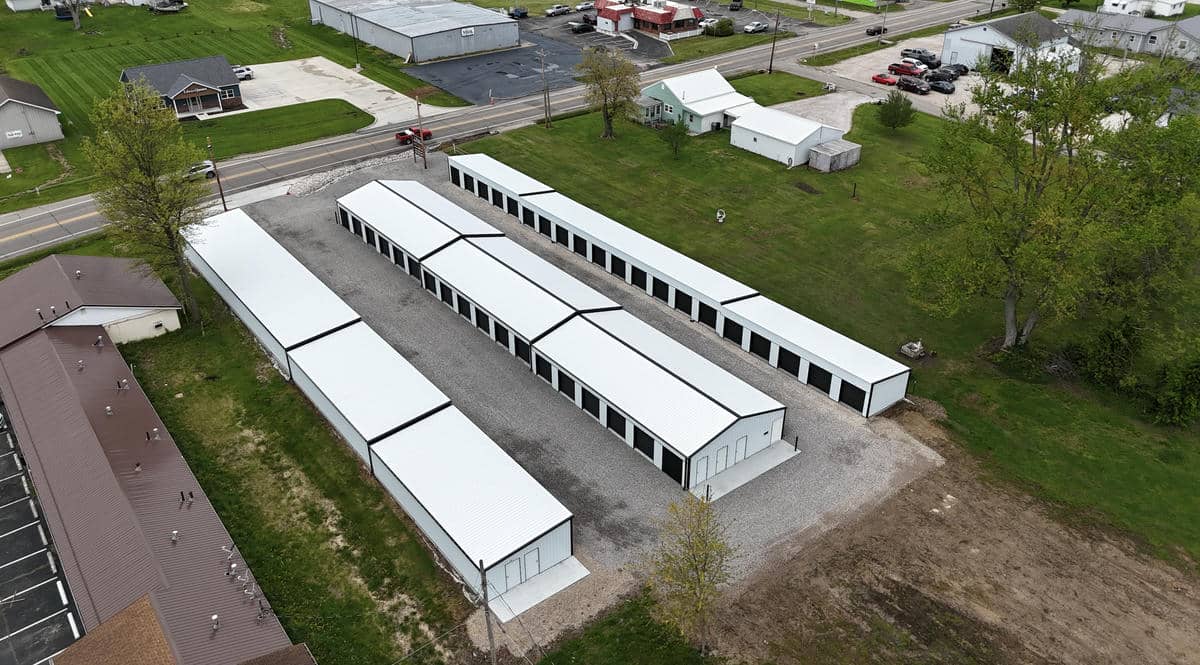
Extra Space Storage operates multiple facilities in Greensboro, North Carolina, including a prominent location on West Wendover Avenue that serves the Guilford County market with a mix of standard and climate-controlled units. In the Piedmont Triad region, self-storage operators contend with a roofing environment shaped by hot, humid summers, occasional ice storms in winter, and the persistent rainfall that the southeastern United States delivers in every season — conditions that demand a roof system with equally strong performance in heat, cold, and moisture.
Greensboro's self-storage facilities typically feature long, low-slope metal-deck roofs spanning row after row of drive-up and interior-access units. The flat footprint that makes storage buildings economically efficient also makes them demanding roofing projects: there is nowhere for water to escape except through the drains and scuppers the original design intended, and any obstruction or low spot in the deck can turn a minor rainfall into a standing water event that stresses the membrane over days and weeks.
North Carolina's Piedmont region receives around 45 inches of rainfall per year, and that moisture arrives in a pattern of intense summer thunderstorms and prolonged winter rainfall events. A self-storage roof membrane must be able to shed water reliably in both conditions. Fully adhered TPO or modified bitumen membranes are the most common specification in this market because they bond directly to the insulation board, eliminating the billowing and uplift risk that mechanically fastened membranes can present when high-wind events accompany Greensboro thunderstorms.
Climate control is increasingly standard in Greensboro's competitive storage market, and the roof assembly determines how efficiently climate-controlled corridors can hold temperature. Summers here are genuinely hot and humid — average July highs in the low 90s with significant moisture in the air — and a roof without adequate insulation allows heat to transfer directly into the conditioned space, running up utility bills and stressing HVAC equipment. We specify polyiso board at thicknesses that meet the ASHRAE 90.1 requirements for Climate Zone 4, which covers most of the Piedmont, and confirm that insulation joints are staggered to eliminate thermal bridging at board edges.
Tenant protection in Greensboro means accounting for the risk of summer thunderstorm interruptions. Our project scheduling builds weather buffers into every phase, and all open deck sections receive temporary self-adhering membranes at the close of each workday during storm season. We monitor the National Weather Service forecast for the Greensboro area in real time during active projects and communicate weather holds to facility management so they can notify tenants if any delay in schedule might affect unit access.
Drainage planning is especially important for Greensboro facilities built on sites with gentle grades. Many storage properties in the Guilford County area were developed on relatively flat commercial parcels, and the original roof deck drainage design may not have accounted for the sedimentation that occurs in drains over the building's first decade of operation. We inspect and document every drain, clean out accumulated debris, and confirm that internal drains have functioning strainer domes to prevent future blockage from wind-blown material.
Parapet walls on Greensboro self-storage buildings are a recurring source of water infiltration. The coping cap at the top of the parapet, the counter-flashing at the membrane termination, and the base flashing at the parapet-to-roof transition are all points where original construction quality varies widely. On aging buildings, we frequently find that coping mortar joints have cracked, coping caps have shifted, and counter-flashing is no longer sealed to the wall. Each of these conditions allows water to bypass the membrane entirely and enter the wall assembly, eventually reaching unit interiors.
For new construction self-storage projects in Greensboro, we work directly with developers and general contractors during the design phase to advise on roof slope, drain spacing, insulation R-value, and membrane specification. Getting these decisions right before concrete is poured costs nothing compared to correcting them after a building opens. We also coordinate with mechanical engineers on HVAC curb placement to ensure penetrations are grouped where possible and located away from drain sumps where standing water risk is highest.
Our Greensboro commercial roofing crews maintain certifications from Carlisle, Firestone, and GAF, enabling us to issue manufacturer-backed NDL warranties on new systems. These warranties are transferable, which is an asset operators can highlight when selling a property or refinancing — a documented 20-year roof warranty with no prior claims is a tangible indicator of property condition that lenders and buyers can value.
What information should we send before a Built-Up Roofing roof walk?
Send the building location, access instructions, roof age if known, leak photos, tenant restrictions, and any previous roof reports. For Built-Up Roofing, that lets us arrive with the right ladder, safety plan, and inspection focus.
Can Built-Up Roofing be handled while the building stays occupied?
Often yes, but the answer depends on access, odor, noise, material staging, and how much roof must be opened. We phase Built-Up Roofing work around dry-in, tenant protection, and the operating schedule below the roof.
How do we compare repair, recover, and replacement for Built-Up Roofing?
We compare evidence. Moisture, layer count, deck condition, drainage, age, and future use decide whether Built-Up Roofing belongs in a repair file, a restoration file, a recover plan, or a replacement budget.
Do you promise manufacturer certification or insurance approval for Built-Up Roofing?
No. We do not invent credentials or promise claim outcomes. We document conditions, identify manufacturer or warranty questions, and keep contractor-side Built-Up Roofing documentation tied to reviewable roof facts.
What makes Greensboro planning different for Built-Up Roofing?
The mix of PTI-area logistics, downtown redevelopment, healthcare, campuses, and older industrial buildings changes access and risk. We plan Built-Up Roofing around the actual building and the business underneath it.