
Solar Roof Integration in Greensboro, NC
Rooftop PV racking, membrane compatibility, and warranty coordination for commercial solar in Greensboro, NC. We prep the roof so your solar array lasts as long as the panels.
Request A Roof Walk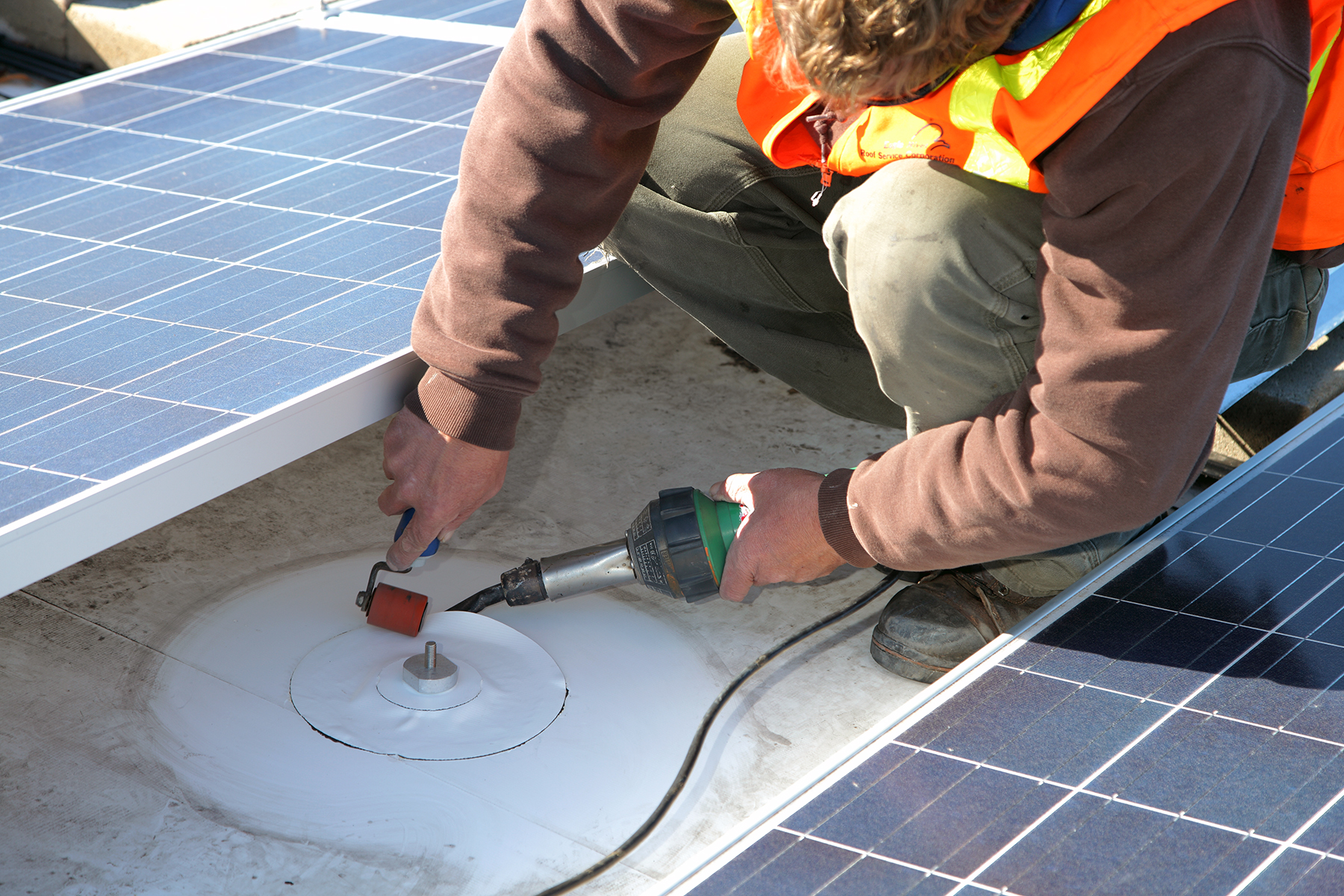
A rooftop solar array is a 25- to 30-year asset bolted to a roof membrane that may have far less life left in it. That mismatch is the single biggest mistake we see on commercial PV projects across Greensboro, and it is the reason we treat solar integration as a roofing decision first and an electrical decision second. We work with building owners along the I-40 and I-85 distribution corridors, the warehouse and manufacturing footprints out toward the Greensboro-Randolph Megasite and the Piedmont Triad International Airport cargo district, and the older office and retail stock around Friendly Center and the West Wendover Avenue commercial strip. On every one of those buildings, the question is the same: will the roof under the panels outlast the panels themselves?
Why the Roof Comes Before the Panels
When a solar array is set on a membrane with eight or ten years of service life remaining, the next reroof becomes a demolition project. The array has to be de-energized, detached, lifted, staged, and reinstalled, then the wiring recommissioned. On a mid-size Greensboro warehouse that detach-and-reset cycle routinely adds tens of thousands of dollars to a job that should have been a straightforward tear-off. So before we let any panel touch a roof, we core the assembly, pull moisture readings, and give the owner an honest remaining-life number. If the membrane has fifteen-plus good years in it, we build the array on what is there. If it does not, we recommend reroofing first so the solar and the roof age together on the same clock.
Penetration vs. Ballasted Racking
Most low-slope commercial roofs in the Triad take one of two racking approaches. Ballasted systems hold the array down with concrete blocks and never break the membrane surface, which keeps the roof watertight but loads the structure with dead weight that has to be verified against the original framing. Penetration-anchored systems bolt standoffs through the membrane into the deck, which is lighter and far better for uplift resistance but creates a flashed roof penetration at every foot. We flash each of those standoffs with the same boot-and-target detail we use on any pipe penetration, heat-welded or sealed to the field membrane so the warranty stays whole. Greensboro sits in a wind zone where summer thunderstorm gusts and the occasional remnant tropical system test perimeter uplift hard, so on taller or more exposed buildings we lean toward mechanically anchored racking rather than relying on ballast weight alone.
Weight, Uplift, and the Structure Underneath
A ballasted array can add three to six pounds per square foot of dead load, and that number has to be checked against the building's structural drawings before anything is ordered. Older bar-joist buildings in east Greensboro were never designed with a solar array in mind, and we have walked away from ballasted layouts that would have overstressed the joists. Uplift is the mirror-image problem: wind getting under the leading edge of a panel row can peel an under-ballasted array off the roof in a single storm. We coordinate the racking layout, the ballast calculation, and the edge setbacks against the wind-load figures for the site so the array stays put and the structure stays within its limits.
Membrane Compatibility and Conduit Routing
Not every membrane belongs under a solar array. We favor a reflective white TPO or PVC system under PV in Greensboro because the cooler surface keeps panel output up and the welded seams give us a clean, monolithic field to set racking on. Ballast pads and walk pads protect the membrane from point loading and from the foot traffic that solar crews bring during commissioning and panel washing. Conduit is its own quiet failure point: runs fastened flat to the membrane abrade it over years of thermal movement, and conduit penetrations flashed with a generic boot instead of a proper pitch pocket or molded penetration become slow leaks nobody finds until the insulation is soaked. We route conduit on raised supports and flash every roof penetration ourselves before the electrician pulls wire.
Coordinating the Warranty Between Two Trades
This is where most solar-on-roof projects quietly go wrong. The roofing manufacturer warranties the membrane; the solar installer warranties the array; and when a leak shows up under a panel three years later, each points at the other. We close that gap up front. The major single-ply manufacturers will keep a no-dollar-limit warranty intact over a solar installation only if the attachment details, walk pads, and penetration flashings meet their published requirements and their field rep signs off. We arrange that manufacturer review as part of the project, document every detail with photos, and make sure the roofing and the solar registrations both reference the same approved assembly. We do not sell panels, so our only stake is a roof that does not leak under the array.
Order of operations matters. The membrane goes down and gets inspected before any racking is staged. Conduit penetrations are cut and flashed by our crew, not the solar electrician, before wire is pulled. The array is set, then a final water-integrity walk happens with both trades present so nothing is buried under panels that should have been caught. We hold a pre-construction coordination meeting with the solar EPC to lock that sequence, the conduit plan, and the inspection holds in writing before the first crew shows up.
Working With Greensboro's Solar Economics
Commercial solar in Greensboro is driven by the federal Investment Tax Credit, North Carolina's net-metering and rider programs through Duke Energy, and the simple math of shaving demand charges off a warehouse or manufacturing bill. Those incentives make the array pencil out — but only if the roof underneath does not force an expensive teardown halfway through the panels' life. Our role is to make sure the substrate is right, the structure can carry the load, and the warranties line up, so the building owner captures the full payback instead of paying for it twice.
Solar Roof Integration Questions
Should we reroof before installing solar, or build on the existing roof?
It comes down to remaining service life. If coring and moisture testing show fifteen or more good years left, we build the array on the existing membrane. If the roof has seven years or less in it, reroofing first is almost always cheaper than paying to detach and reset the array during a future tear-off. We give you the remaining-life number before you commit either way.
Do solar attachment points have to penetrate the roof?
Not always. Ballasted racking holds the array with weighted blocks and never breaks the membrane, which suits many flat Greensboro roofs. Penetration-anchored racking is used where uplift resistance matters or where the structure cannot carry ballast weight. When we penetrate, every standoff is flashed individually and covered under the membrane warranty.
Will adding solar void our roofing warranty?
Not if it is done to the manufacturer's spec. The major single-ply manufacturers keep their warranty intact over an array when the attachment details, walk pads, and penetration flashings meet their requirements and their rep reviews the installation. We arrange that review as part of the project so the coverage survives.
What membrane works best under panels in Greensboro?
A reflective white TPO or PVC system, usually 60-mil. The white surface keeps panel temperatures and output up, and welded seams give a stable, watertight field for racking. Where ballast weight is a structural concern, a fully adhered system removes the dead load.
Do you coordinate with our solar contractor?
Yes. We hold a pre-construction meeting with the solar EPC, set the installation sequence, flash all conduit penetrations ourselves before wire is pulled, and run a joint final water-integrity walk so both the roofing and solar warranties register against the same approved assembly.